

Ceremony, craftsmanship and climate. How a royal Indian symbol found a new life under English skies.
It was around twenty-five years ago. My daughter was six, and I was still working in television, producing and developing documentaries. After spending time with family in Bangalore, we decided to travel south to Kerala for a holiday. It was there, almost by accident, that everything changed.
We arrived during the extraordinary temple festival of Thrissur Pooram. A spectacle of astonishing scale and ritual complexity. At its heart are two ancient temples, each supported by affiliated temples across the region. For weeks beforehand, elephants and deities are prepared for procession into the city.
Over three days, elephants, mahouts, orchestras of drummers and horn players, and vast crowds gather in the heat and humidity.
The climax is a ceremonial display in which teams compete in flamboyant sequences of changing parasols and decorations. It is an exuberant exchange of colour, rhythm and pageantry before a huge audience.
The processions move slowly through temple grounds, the elephants adorned and ceremonial, and above them, catching the light, were the most extraordinary umbrellas. Highly decorative, richly coloured, held aloft with quiet authority.
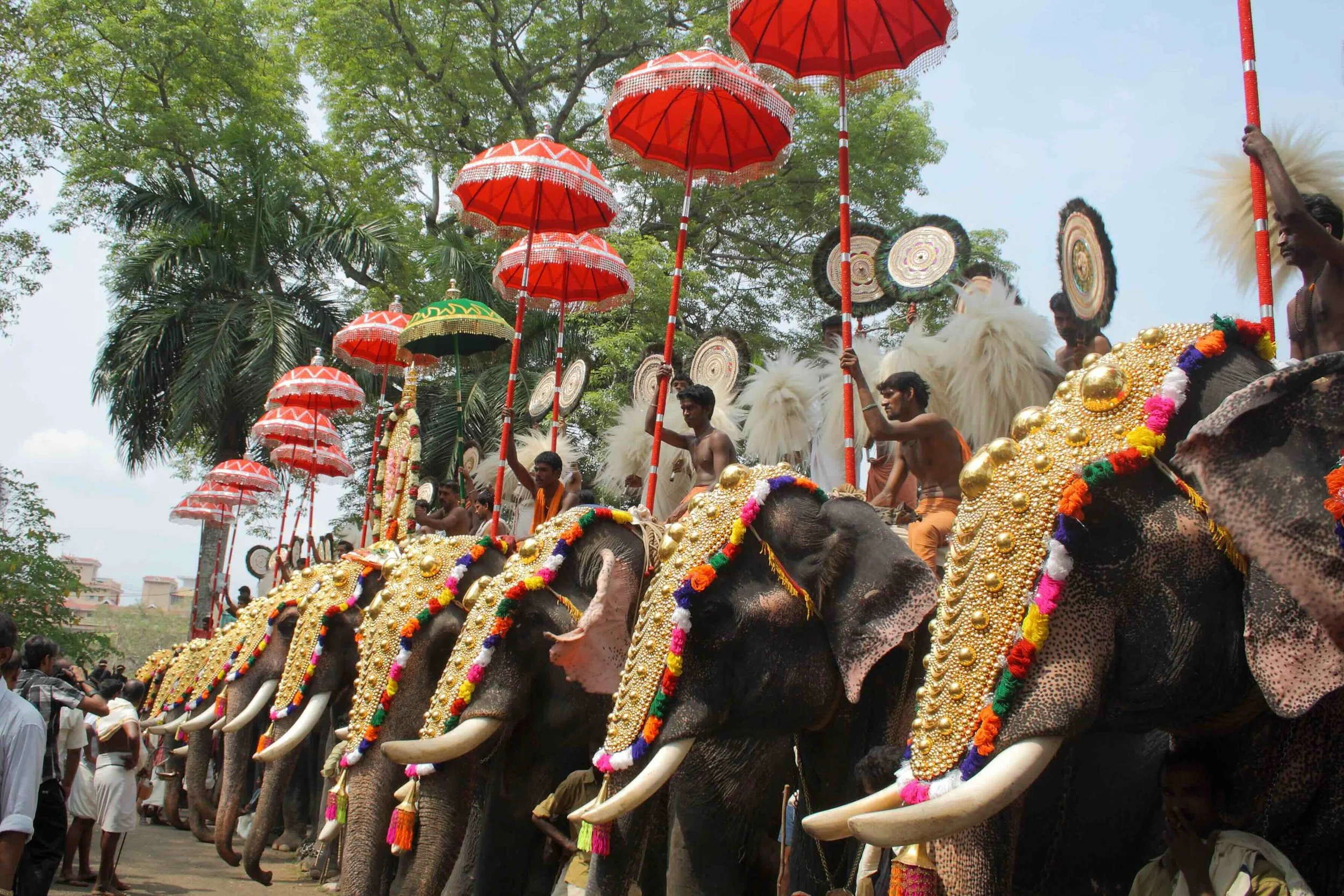
Elephants decorated with golden headgear and vibrant parasols at the annual Thrissur Pooram .
A friend I was travelling with, who would later become a business partner, turned to me and said, almost casually, they’d look amazing in British gardens. It was a throwaway comment, but it stayed with us. We were both instinctively drawn to the idea that something so rooted in India might travel .
At the time, I had no intention of starting a business. But curiosity has a way of opening doors. We began visiting temples to learn more about the umbrellas, discovering they were ceremonial pieces, traditionally made by artisans. Eventually, we found a small family-run workshop and began talking about whether it might be possible to adapt the umbrellas for a very different context.
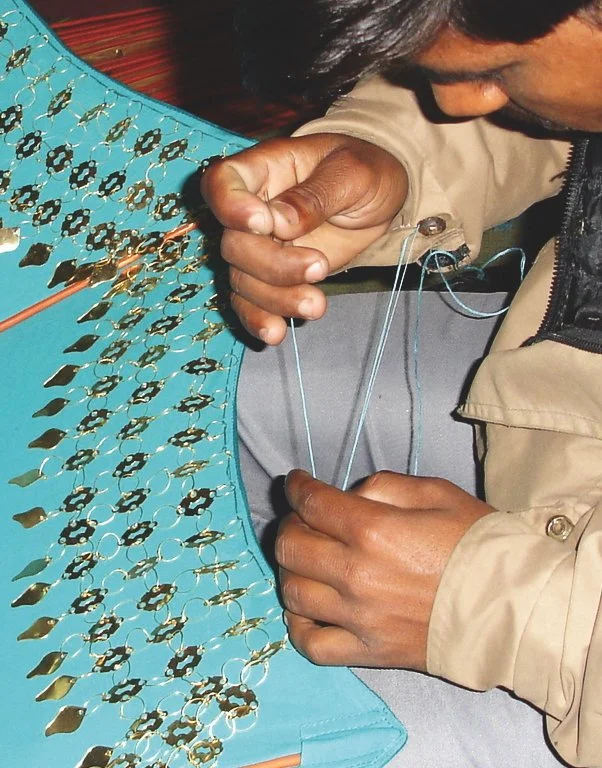
Hand-cut brass trim being stitched onto the umbrella canopy by hand.
That process was naïve, practical, and full of lessons. Metal trims were redesigned in aluminium so they would not rust. Wooden frames had to be kiln-dried correctly. Our first large order, two hundred and fifty umbrellas, taught us very quickly about shipping containers, moisture content, and what happens when timber travels across oceans without proper preparation.
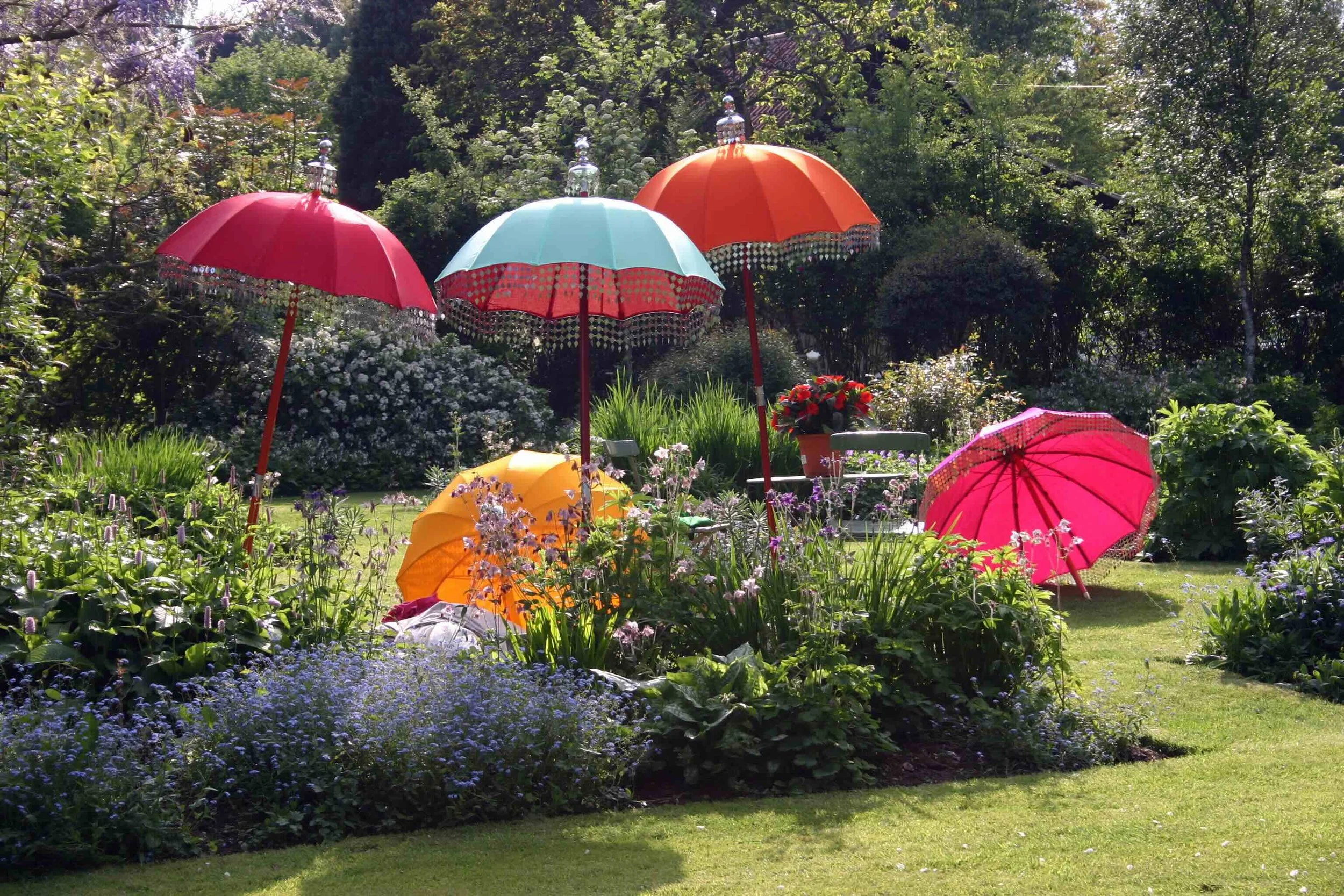
Our first shipment of Raj umbrellas.The carved wooden poles arrived damp from the journey, so we stood them out in my garden to dry in the sun.
The umbrellas arrived wet. We dried them, repaired them, loaded them into the back of the car and began selling them to shops in London, who took them immediately. We did a few trade shows. Demand grew. We went back to Kerala. This time armed with dehumidifiers, new specifications, and a growing understanding of how difficult it is to produce well in a climate where humidity is constant.
It was a steep and humbling learning curve. It was part design evolution, part technical apprenticeship.
Over time, we refined the proportions so they felt at home in English gardens while still honouring their Indian origin. The silhouette became slightly quieter, the materials more robust, but the spirit remained. Our umbrellas were ceremonial, joyful, unmistakably rooted in Indian festival tradition.
As we began to make them in larger numbers, we realised we needed to understand them properly. If we were to reinterpret these umbrellas, we had a responsibility to know where they came from.
The traditional Indian umbrella is known as a chhatri. A word that carries centuries of meaning. Long before it became decorative, it was a symbol of sovereignty. In Sanskrit texts, the parasol appears as one of the ancient emblems of kingship. To stand beneath a canopy was to be marked out as elevated person and politically and spiritually protected.
In Mughal and Rajput courts, parasols were carried above rulers during royal processions. Miniature paintings show maharajas seated high upon caparisoned elephants, attendants holding elaborate silk and brocade umbrellas above jeweled turbans and silver howdahs. The chhatri signified rank, honour, divine sanction.
Under the British Raj, this visual language continued. Photographs from the late nineteenth century show Indian rulers beneath richly worked parasols during imperial durbars and state occasions. The umbrella remained what it had always been a declaration of status and ceremony.
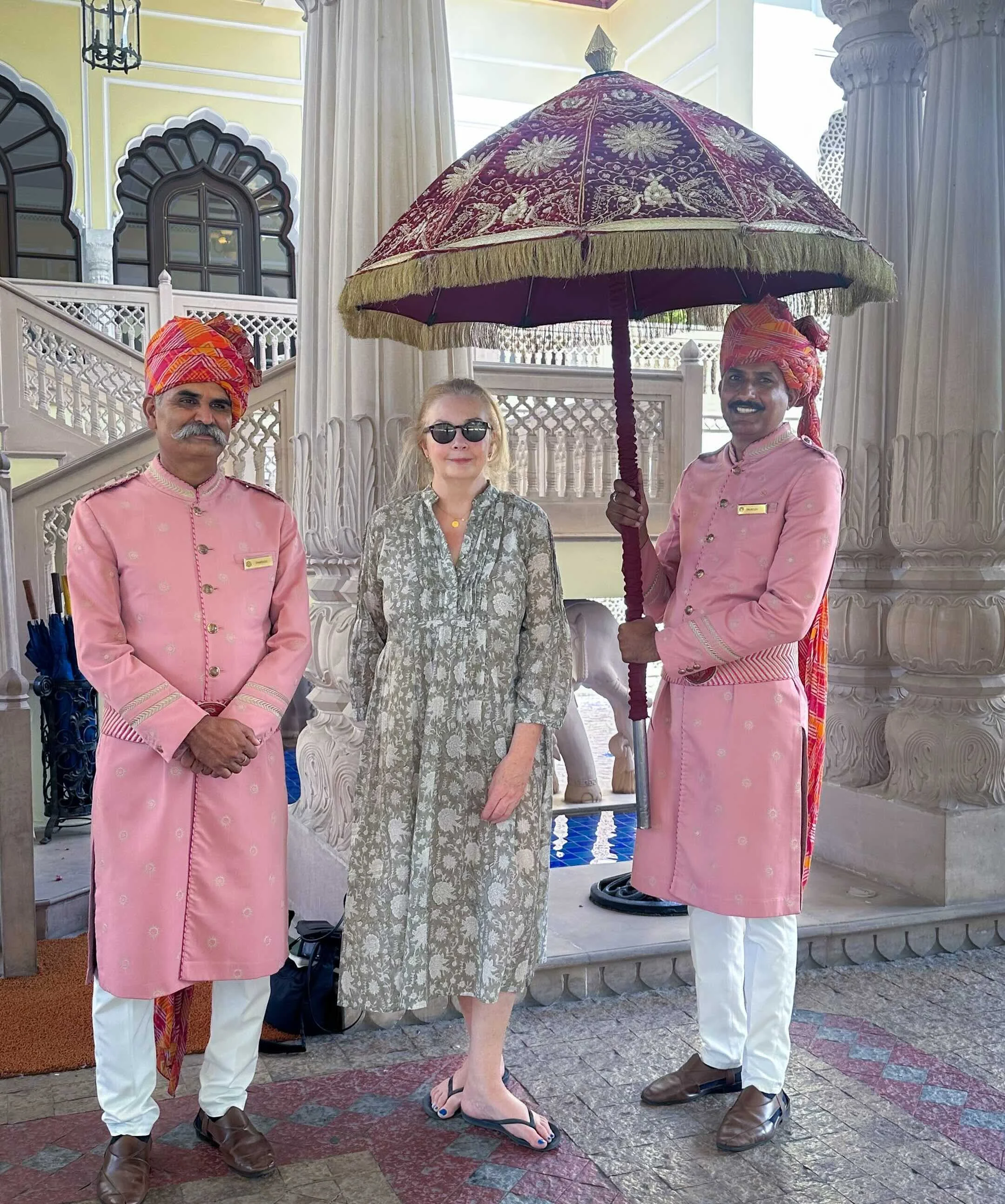
Rambagh Palace, Jaipur, last year. Under a ceremonial umbrella.
And then, in Kerala, the story becomes more theatrical. During temple festivals such as Thrissur Pooram, the ceremonial umbrellas, known locally as muthukudas, are part of a dramatic visual exchange. Teams of elephants stand facing one another while attendants rhythmically change parasols in rapid succession, each more elaborate than the last. Silk, mirrored trims, gold fringe, set against orchestras of drums and horns, dense crowds, heat and fireworks.
It was from this lineage, royal, sacred and vibrant, that our garden umbrellas quietly emerged.
Understanding that history changed the way we saw them. They were never simply decorative objects. They carried symbolism, hierarchy, theatre and devotion. Translating them into something that could live in an English garden meant retaining that presence, even as the materials and construction adapted to a very different climate.
We worked with other workshops, refined the designs, and expanded production. Eventually, we were shipping multiple containers a year, selling umbrellas internationally, and later developing them in Bali as well. For a time, we became known for them.
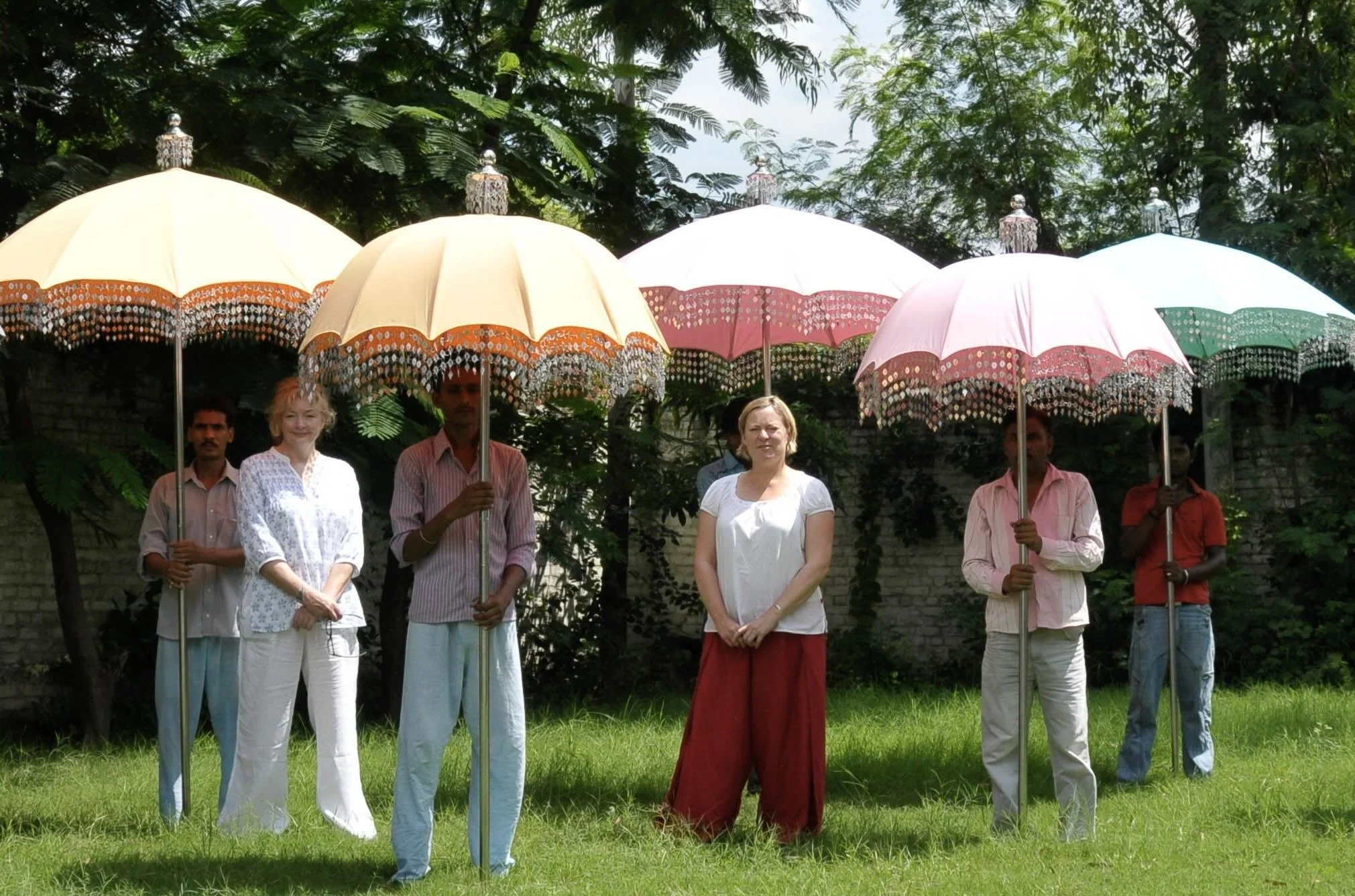
Kerala craftsmen made the original umbrellas with wooden poles; these were an early experiment with metal poles from northern India. With Sarah, who worked with me.

Our first photo shoot in Kerala, with the initial two hundred and fifty umbrellas. A moment of real excitement.
What mattered most, though, wasn’t scale. It was learning how to take something traditional and adapt it carefully for a different environment without losing its integrity. The umbrellas became more robust, colourfast, able to withstand European weather. That same thinking later shaped the development of the Indian garden tents: rooted in tradition, adapted with respect, and made to last.
During those years, I spent more and more time in India, working with artisans, craftspeople and small family businesses. Not as an outsider passing through, but as someone learning sometimes the hard way that craft, climate, material and context are inseparable.

Who would have imagined that the ceremonial umbrellas of Kerala’s elephant festivals would find a second life in English gardens? Reimagined, refined, and carried across continents yet still utterly at home beneath softer skies.
Looking back, the umbrellas were never just products. They were an education, and the beginning of everything that followed.